
The way people use the internet has evolved. They are not just searching on Google with short keywords. Users now ask full questions directly on AI Platforms like ChatGPT or Google Assistant and expect one clear answer. In 2026, if your brand is not a part of that answer, you’re already a step behind.
Ranking on the first page of Google is still important. However, it is no longer enough to show up on a page. For your brand to survive and thrive, locally or globally, it must be integrated into the AI ecosystem. This is where Answer Engine Optimization and Generative Engine Optimization come into play.
My experience with high-growth clinics is that 1st page rankings do not guarantee a better ROI or leads. But showing up in AI overviews made all the difference to my client’s website traffic, leads and conversions. In this blog, I’ll explain why business owners/CMOs must move beyond traditional SEO practices and focus on AI searches in 2026. I will also share my experience to help you identify the reason behind your stagnant traffic and turn it into measurable conversions.
At Easy Digi, my team had a conversation with one of our clients before they signed up with us. Please take a look and see if you can relate.
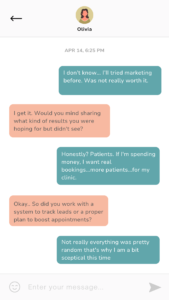
So, where exactly does this gap begin to show?
Let’s find out.
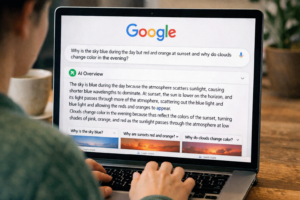
Zero-click reality is when your website is on the first page of Google but has no clicks or has stagnant traffic. This happens when the users get their answers directly from AI overviews without having to click the organic results below.
Here is some data to expose the reality of clickless search to you:
People want quick answers from trustworthy sources on AI platforms. This is the reality. This is the present and future of digital visibility.
Prioritize Generative Engine Optimization (GEO) as an integral part of your marketing strategy. It ensures that AI engines trust your brand and your content to build its answer.
A strategic framework to help you deal with this reality:
Does zero click reality mean SEO is dead?
No, it means SEO is evolving. To thrive in 2026, you need to stop chasing clicks. Instead, make your content an authoritative source of truth that AI models trust. So even if they don’t click the organic result, they still connect with your brand through the direct answers on AI engines.
Earlier, the strategic use of keywords could get your website ranked. But now you need to understand the intent behind each keyword and structure your content accordingly. Just repeating a string of words provides zero value to your users.
Outcome?
AI sees this as low information density and skips your content when generating an answer for the user. Oh my God
Here is an example to make things clearer:
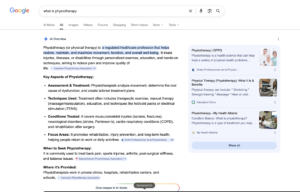
Search intent- informational
Search intent- Navigational
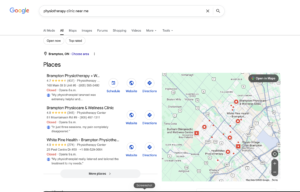
Let’s say you are a physiotherapy clinic owner in Brampton. Now you want your business name to appear when someone searches for “back pain relief” in your location.
So you maintain the keyword density in your content for the search engines.
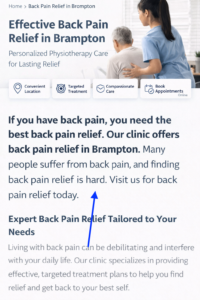
This content is bloated with repetitive phrases. AI flags it as filler and filters it out of the AI overview entirely.
So what can you do to prioritize intent?
You answer the questions behind the pain. In other words, you understand the intent of your user and align your content accordingly. It would look something like this.
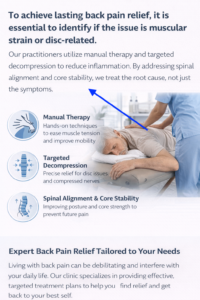
This content has appropriate vocabulary related to the topic. AI understands the intent is a medical solution, not treatment, and it cites you as an authority.
Did you notice what happened?
You never had to repeat the same words just for the sake of Keyword Density. All you had to do was solve a specific problem with accurate information through an intent-based content.
Why does intent matter for your brand?
AI now understands context, sub-tasks and follow-up needs, thus giving rise to the importance of conversational queries. To remain visible, you must provide accurate answers to complex, human-like questions in your content.
People don’t just Google stuff these days. They are using a diverse ecosystem of AI agents, voice assistants, and specialized browsers to find information.
Imagine this scenario.
You run a Cannabis store in Toronto.
Earlier, a consumer would simply search on Google, typing ”CBD gummies near me in Toronto.”
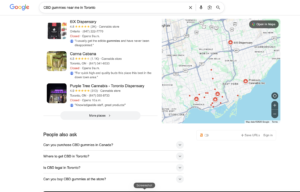
The search behaviour has changed now.
In 2026, the same user is most likely to also search Reddit for real human reviews and TikTok for visual proof.
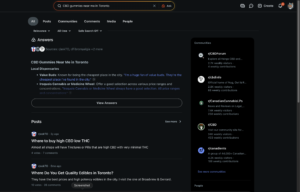
They may ask AI agents like ChatGPT or Gemini to shortlist some reputable store names for them.
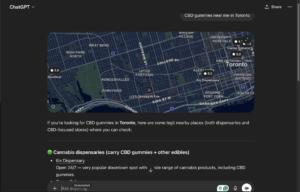
All in all, with the rise in AI searches, the possibilities of your brand being discovered have also expanded. Look beyond organic SERPs and focus on AI & social searches.
How to improve your brand visibility in 2026?
Getting your website on the first page of Google is no longer the only goal of marketing. In 2026, to remain discoverable, your brand should become the trusted source across every platform. Whether the user is asking their browser, talking to Alexa or reading Reddit comments, your brand’s digital footprint must be clear, consistent and authoritative.
AEO is Answer Engine Optimization. It is the strategic process of structuring content so that it appears across AI platforms like Google AI Overviews, Perplexity, and ChatGPT. AEO allows the AI search engines to easily extract, synthesize and cite your content as a direct response to a user’s query.
| Feature | SEO (Search Engine Optimization) | AEO (Answer Engine Optimization) | GEO (Generative Engine Optimization) |
| Primary Target | Traditional Search Engines (Google/Bing) | Answer Engines (Perplexity/Alexa/Siri) | LLMs (ChatGPT/Claude/Gemini) |
| Core Objective | Drive Traffic: Get a user to click a blue link and visit your site. | Provide Solutions: Be the direct, immediate answer in a zero-click result. | Influence Logic: Be the brand the AI “thinks of” when a user asks for a recommendation. |
| Key Tactic | Keywords, Backlinks, & Technical Site Speed. | Structured Data (Schema), FAQs, & “Atomic” Definitions. | Information Gain, Brand Mentions, & “Citation Velocity” on Reddit/Social. |
| Content Style | Long-form, comprehensive articles. | Bulleted lists, tables, and 50-word summaries. | Case studies, unique data, and expert “points of view.” |
| AI “Action” | The AI indexes your page. | The AI extracts a fact from your page. | The AI synthesizes your brand into its personality. |
AI search engines provide answers through the RAG process (Retrieval-Augmented Generation). I have broken down the steps for you in very simple words. I’ll discuss this in depth in another blog.
Retrieval
When a user asks a question to AI, it instantly crawls a massive index of information on the web relevant to the question. It looks for factually correct structured data and direct answers. Once it finds the most relevant and up-to-date facts, the AI engine retrieves that data.
Augmentation
The AI then augments the retrieved data to shortlist valuable information, specifically about your query.
Generation
Finally, the AI uses a large language model or LLM to generate a human-sounding response. However, the answer is based only on the facts it found on the internet.
AI search engines prioritize clarity, relevance and intent. So a successful AEO strategy should also focus on the same. Make sure your content is easily discoverable, understood and trusted as the best possible answer by platforms like ChatGPT.
Here are the four crucial components that make an AEO strategy successful.
AI can synthesize in-depth answers, and that too quickly. But it cannot experience anything. Can it?
Humans can. Use this experience to create content, incorporating new, unique insights that don’t exist in the AI’s training model.
Take a physiotherapy clinic, for example.
In its service page, a simple sentence like ” Physiotherapy helps with ACL recovery” doesn’t reflect the brand’s trustworthiness. However, changing it to a first-hand experience, like “In our Brampton clinic, we found that athletes who integrated swimming into Week 3 of ACL rehab recovered 15% faster,” helps your brand get noticed as a primary source of data.
Structured data is how you make your content AI-friendly. It conveys what your content is about in a way that AI is more likely to cite you as a source. AI bots can accurately extract and cite your fax facts if the right structured data is present in the content. There are different types of Schema, with each serving a specific purpose, contributing to Answer Engine Optimization.
| Schema Type | Purpose for AEO |
| FAQPage | Mirrored Q&A pairs that AI “Brokers” can lift directly into summaries. |
| HowTo | Step-by-step instructions that power voice assistants and “Rich Snippets.” |
| Person | Connects authors to their credentials (E-E-A-T) to prove the content isn’t “AI-slop.” |
| LocalBusiness | Essential for being found in “Near Me” voice searches and map-based AI answers. |
| Article | Defines the “who, what, and when,” giving the AI a clear timeline for its “Recency Bias.” |
AI models really read your entire 2000-word blog from start to finish. Instead, they can scan and look for content blocks that directly answer users’ queries and are easy to summarise.
Each section under your H2 or H3 sub-headings should answer a specific question without having to refer to the rest of the page’s context. If a user asks a niche question, the AI should be able to extract the section immediately under H2 and the following paragraph as a perfect, complete answer. This compactness allows your content to appear in AI overviews, conversation search and voice search results.
Conversational semantic search is how you align your content with the complex, intent-heavy way humans actually speak in real life. Earlier, you could pick up a high-volume search query and curate content, matching the exact words in that query. In 2026, however, with the rise of Siri 2.2 and Gemini Live, it is now more important than ever to build content based on the intent behind those words.
AI queries are longer, more specific and contain contextual clues. AI models use natural language processing (NLP) to generate the most relevant and valuable answer based on these clues.
For example, let’s say you published a blog on the best ways to relieve back pain. Your target audience is seniors and desk job workers.
Tweak this very strategy to make your business stand out in 2026. This time, understand what your target audience needs and provide exact, real solutions through your content.
Optimize the topic for conversation searches: “What is the best way to fix lower back pain caused by sitting at a desk for 8 hours?”
Whether you are a small-sized or mid-sized local business, there are four major search ecosystems that you need to focus on.
Google Gemini & AI Overviews
These provide you with a single direct answer. The platforms pull relevant data from multiple high-authority and trustworthy sources to build a certain answer.
Perplexity AI
Also known as a discovery engine, Perplexity is more like a research assistant. It provides the list of citations, besides giving an answer to the user.
SearchGPT / OpenAI
SearchGPT prioritizes brand mentions, conversational flow in content and genuine social sentiment. So if Reddit recommends your Gym to people in Brampton, chances are AI will also recommend you in a conversational response for a similar query.
Voice Search
Devices like Siri and Alexa typically do not read out keyword-rich content; They read the single best answer. Include short, punchy answers that these devices can read aloud and help the user in real time. Your answer should provide an immediate solution to the user without wasting their time or misleading them.
| Platform | Primary Action for Visibility |
| Google Gemini & AI Overviews | Place a bold 40–60 word summary directly under H2/H3 question headers. |
| Perplexity AI | Include specific stats, dates, and “Key Takeaways” boxes. Perplexity favours data that can be verified across multiple sites. |
| SearchGPT (OpenAI) | Optimize for mentions in high-authority forums. |
| Voice Search (Siri/Alexa) | Use technical markup to tell the AI exactly which 25-word sentence is the “voice-ready” response for that topic. |
| TikTok & Social Search | Treat every video description as a mini-blog. Use “In-Video Text” that matches conversational search queries. |
| Meta AI (FB/IG/WhatsApp) | Ensure your “LocalBusiness” metadata is flawless and your Google/Meta reviews mention your specific services. |
You don’t have to start from scratch. Tweak the existing strategy to adapt to this age of AI search. Google still processes about 16.4 billion searches per day. This is where your SEO game comes into play. At the same time, as early as 2026, 37% of consumers start their searches with AI tools like ChatGPT or Gemini rather than Google. Gartner predicts that traditional search engine volume will drop by 25% by the end of 2026.
So here is what you can change to make your strategy work in 2026 and beyond.
Scan the top 10 pages of your website. Does the content provide the core answer to the user’s query without really wasting their time with inaccurate or misleading information? If yes, is the answer immediately available to the user, or do they need to go through a lot of fluff to reach the answer? These kinds of pages rank well but use vague language and lack depth.
The goal is to match the conversation intent of modern search. Think of questions your target audience can ask the AI for quick answers. Now all you have to do is prioritize this Q&A format in your content to make it compatible with AI overviews and voice search results.
Your brand should have all the essential details like name, address, phone number (NAP) and core services the same across the entire web. This signals trustworthiness. AI finds identical data across the web and wins confidence in citing you as an authoritative source. Whether it’s on Google Business, LinkedIn, Yelp or any other industry-specific directories, make sure the business information (NAP) is the same.
AI has indeed changed the way people search. They ask direct, complex questions to an AI platform like Gemini or ChatGPT rather than simply typing keywords on Google.
The reason why they are searching has also changed. People want answers, and they want them accurate and quick. While ranking on the first page of Google is still relevant, for maximum brand exposure in 2026, it has to appear on AI platforms as well. Answer Engine Optimization and Generative Engine Optimization are what you need to make your brand an established authority in the world’s most powerful AI models.
Every piece of content, whether it’s a blog post or a case study, that you publish is the data hub for the AI ecosystem. If you can provide the most accurate, structured, experience-rich data, AI will give YOU authority on its platforms.